可变基数树技术分享
本文目录
可变基数树分享
使用可变基数树优化交易订单簿以及使用SIMD硬件加速查找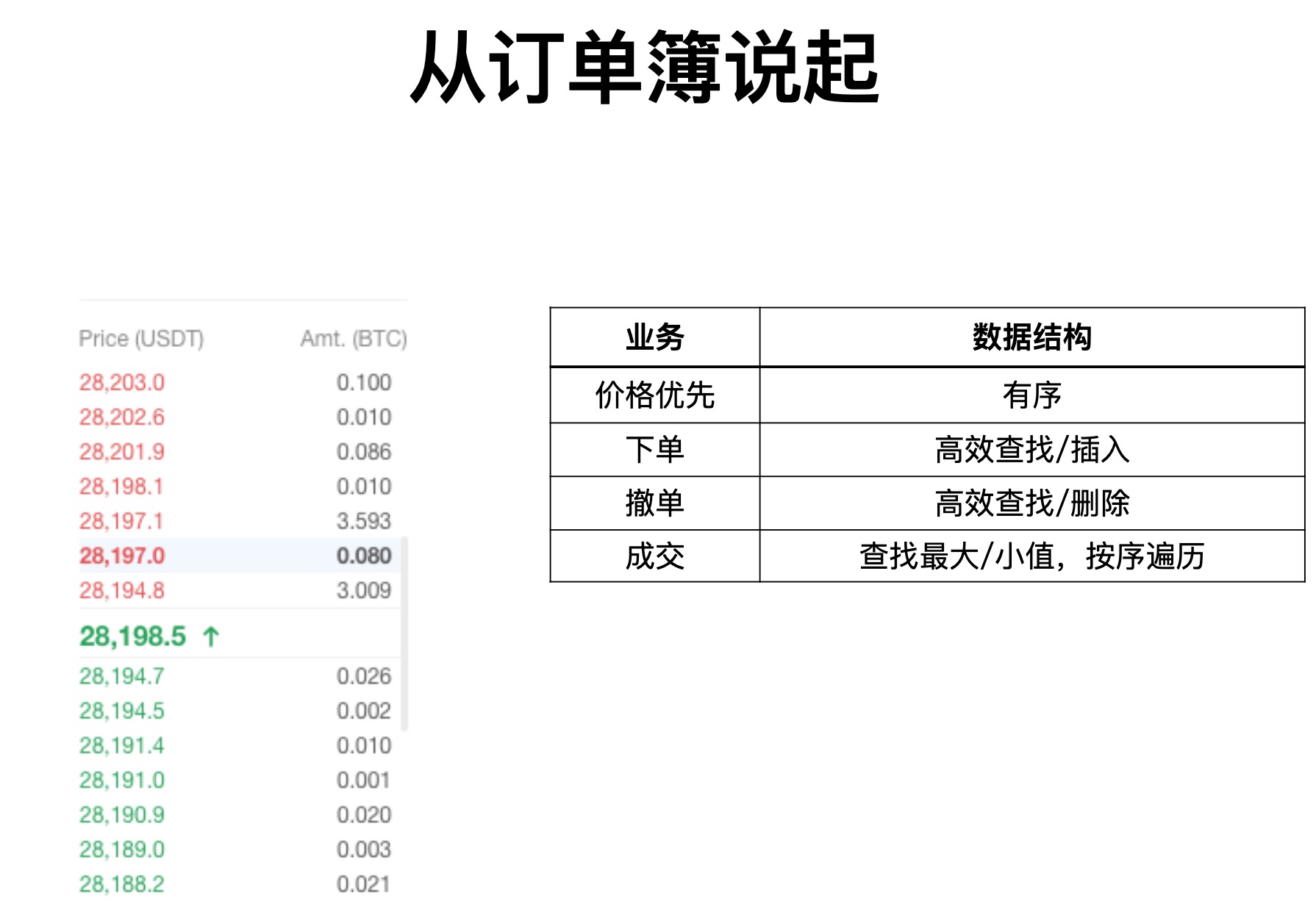
主要参考论文: https://db.in.tum.de/~leis/papers/ART.pdf
背景
内存变得容量更大更便宜,整个数据库/存储引擎可以放到内存
传统的内存数据索引一般是平衡二叉树 在现代的硬件上效率不高
另一类索引结构,hash表 只支持单点查找,范围查找不好
索引效率是决定性能的关键因素
前言
T树和二叉树 硬件支持不好 on modern hardware architectures
B+ tree 缓存敏感,但是update代价比较大
The k-ary search tree and the Fast Architecture Sensitive Tree (FAST) 使用数据级并行性与单指令多数据 (SIMD) 指令同时执行多重比较。此外,FAST 使用的数据布局通过优化利用缓存行和 TLB 来避免缓存未命中。但两种数据结构都不能支持增量更新。
哈希表随机分散了键,只支持点查询;另一个问题是大多数哈希表不能优雅地处理增长
GPU 可以实现比 CPU 更高的吞吐量。然而,使用 GPU 作为专用索引硬件还不实用,因为 GPU 的内存容量有限,与主存的通信成本很高,
Trie
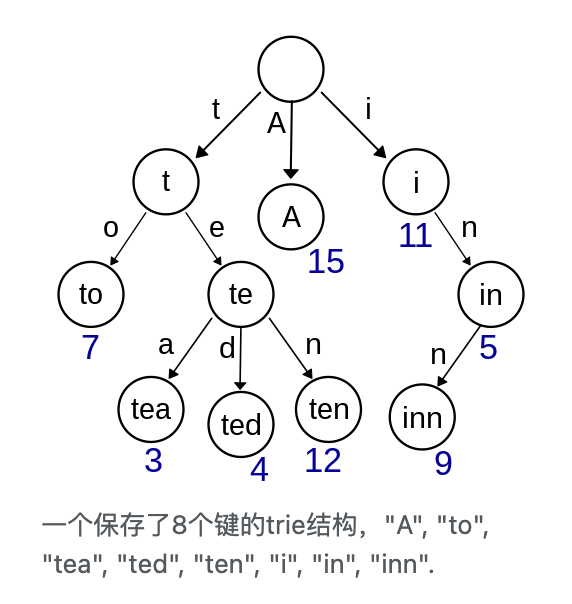
Trie 大多数研究都集中在索引字符串上,但我们的目标是索引其他数据类型。因此,我们更喜欢术语基数树而不是 trie,因为它强调了与基数排序算法的相似性,并强调可以索引任意数据而不仅仅是字符串。
在实际实现上,“基” 一般是 2^K中的 K,下面解释。
基数数是什么结构?
按字母顺序排列的字典书中的拇指索引。一个词的第一个字符可以直接用来跳到所有以该字符开始的词。在计算机中,这个过程可以用接下来的字符重复进行,直到找到一个匹配的字符。作为这个过程的结果,所有的操作都有O(k)的复杂性,其中k是key的长度。
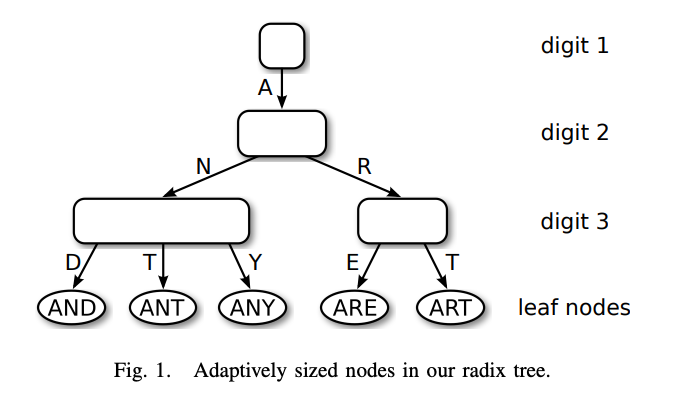
特点:
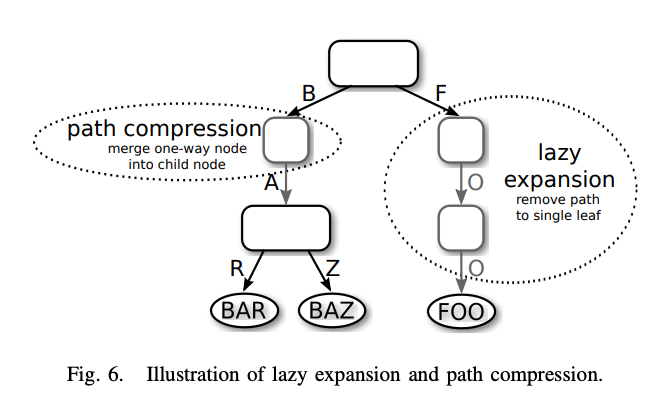
路径压缩和懒惰扩展,使ART能够通过折叠节点有效地索引长键,从而降低树的高度
根据子节点的数量动态地选择结构
树的高度与Node个数无关,与key长度有关
all insertion orders result in the same tree
key是隐藏的,可以从路径获得
不需要平衡
Key按字典顺序存储
可伸缩的node
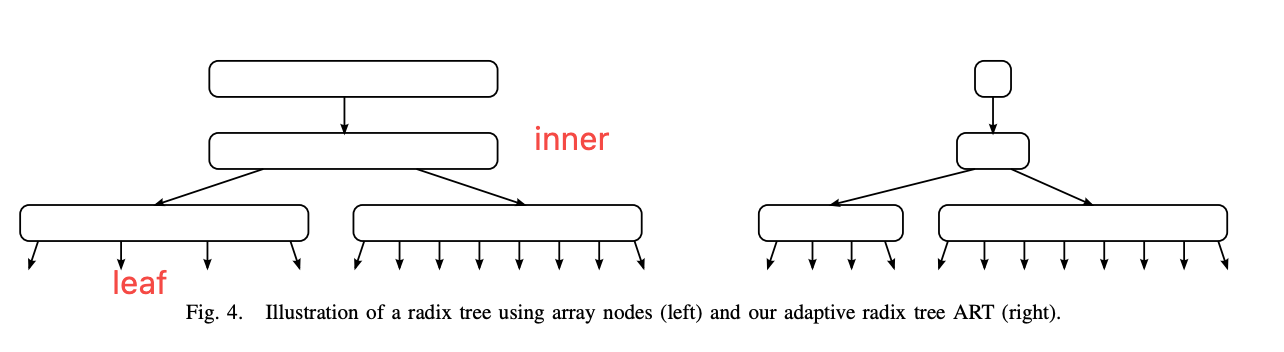
node span
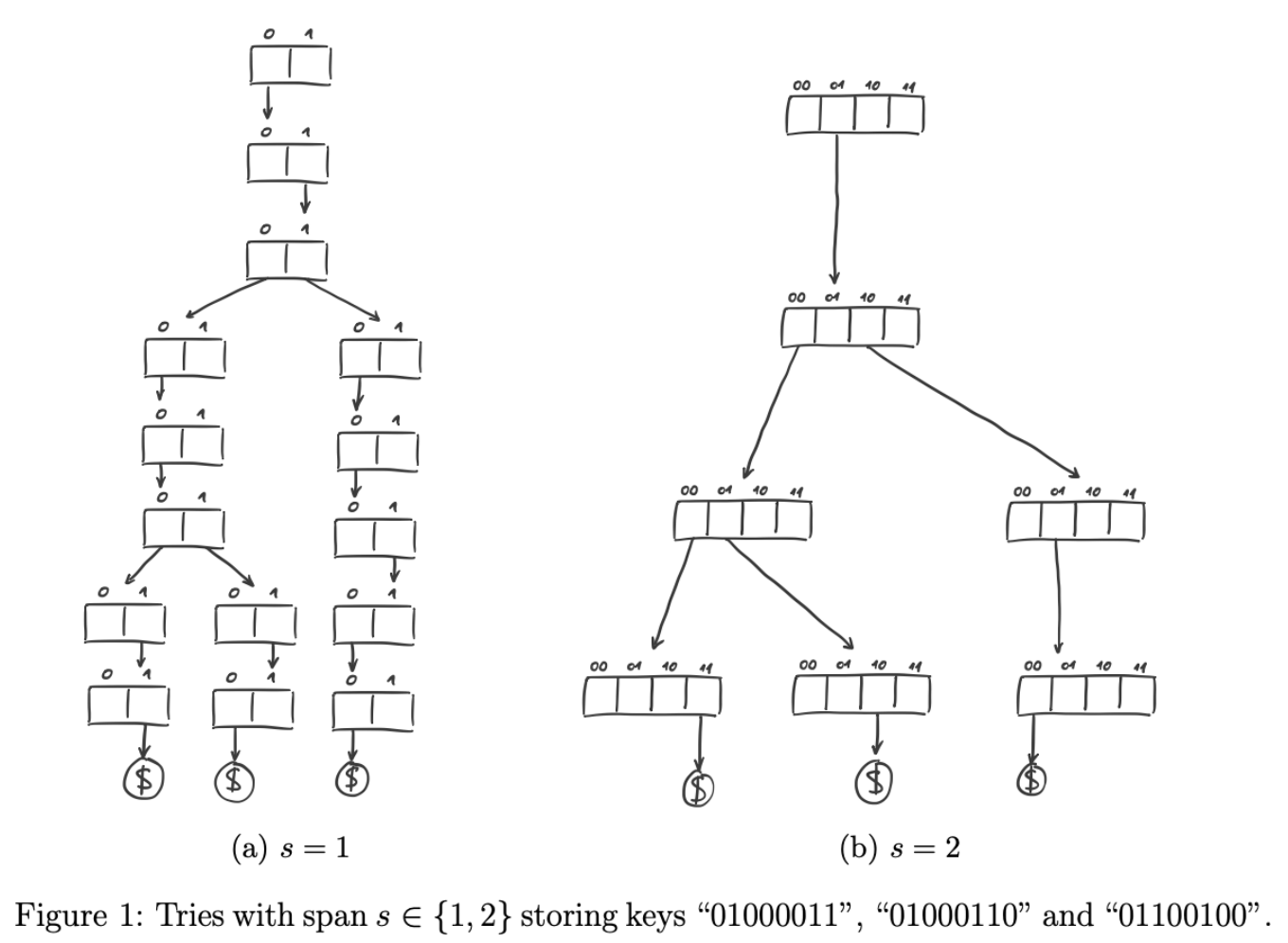
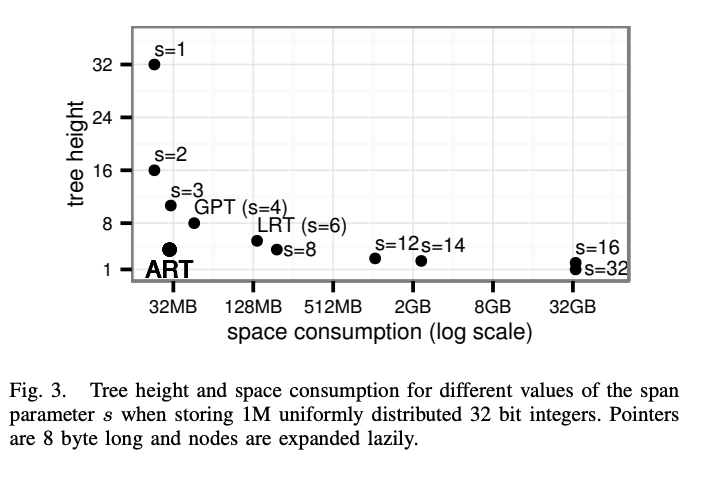
影响因素:
- Span越⼤, ⾼度越低
- Span越⼤ , 空间占⽤越⼤
问题: 选多大的span? 1. 折中 2. 可变的node类型
-> 可变基数树 node类型可变
处于性能考虑,节点的类型比较少,如果是几十类,resize的代价会很高
Inner Nodes

插入时,当前node大小没有空间,扩展到大一级的node,同样,缩小时resize到小一级的node。
each inner node has at least two children.
Leaf Nodes
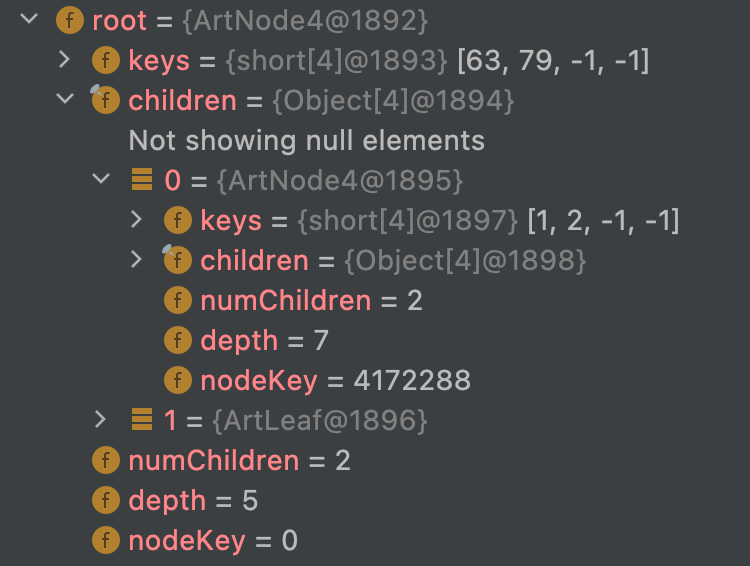
简单的例子
put(0x3FAA01L,"0x3FAA01L");
put(0x3FAA02L,"0x3FAA02L");
put(0x4FAA03L,"0x4FAA03L");
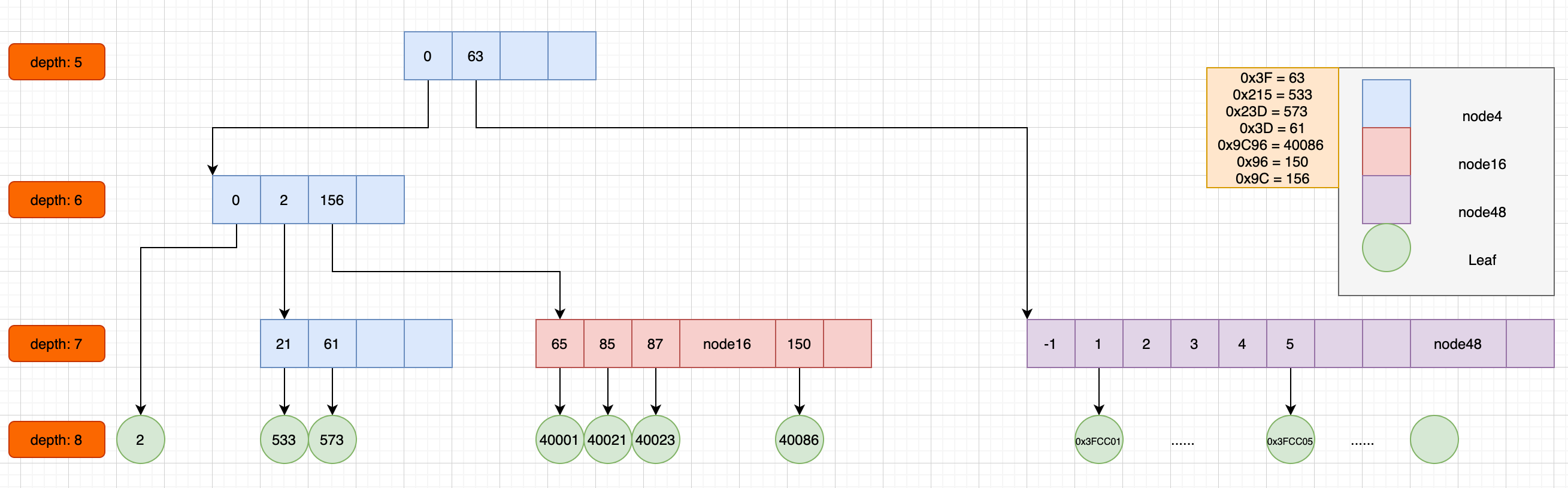
例子二
map.put(2,"2");
map.put(533, "533");
map.put(573, "573");
map.put(40001, "40001");
map.put(40021, "40021");
map.put(40023, "40023");
map.put(40044, "40044");
map.put(40086, "40086");

for(int i = 0;i<20;i++){
    long x = 0x3FCC01 + i;
    map.put(x , String.valueOf(x));
}
算法
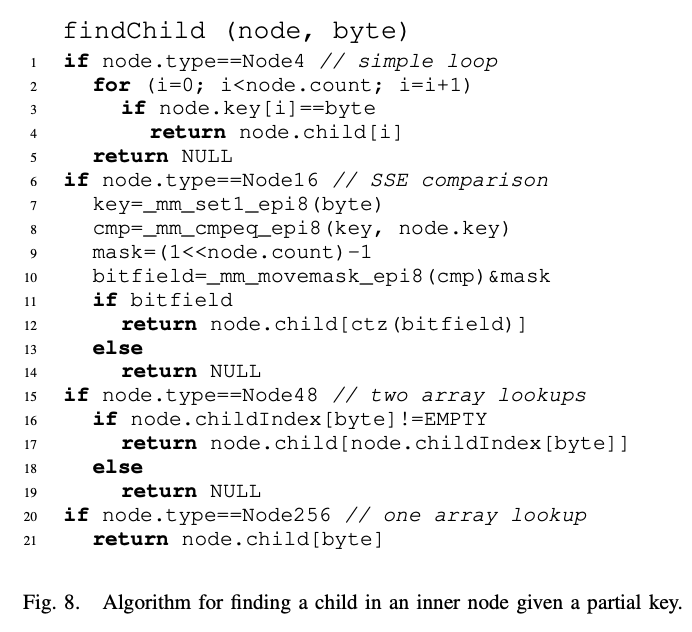
search
get(key)
	cur = root
	while(cur){
		checkPrefix(key) != depth
			return null
		isLeaf(cur)
			return vale
		// 向下递归
		cur = cur.find(key)

	}
Insert
put(key , value){
	leaf = createLeaf(key,value)
	root == null ? root= leaf return
	cur = root
	while(true){
		if (checkPrefix(key) == true ){
			// 替换旧节点
			isLeaf() replace(leaf)

			//cur is inner
			child = cur.findChild(key)
			// 没有子树 branch
			child == null {
				cur.needGrow() ? grow()
				cur.put(leaf)
			} else {
            	// 递归向下
				cur = child
        	}
		} else {
			//分裂
			newNode = createNode4
			newNode.put(cur)
			newNode.put(leaf)
			curParent.adjust
		}

	}
}
grow & shrink
grow(){
	node4 -> node16 {
		copy
	}

	node16 -> node48{
		// 规则转换
		key rules transform
		children index build
	}

	node48 -> node256{
		// 没有keys数组了 children数组index转换
		children index by node48 key
	}
}
分裂
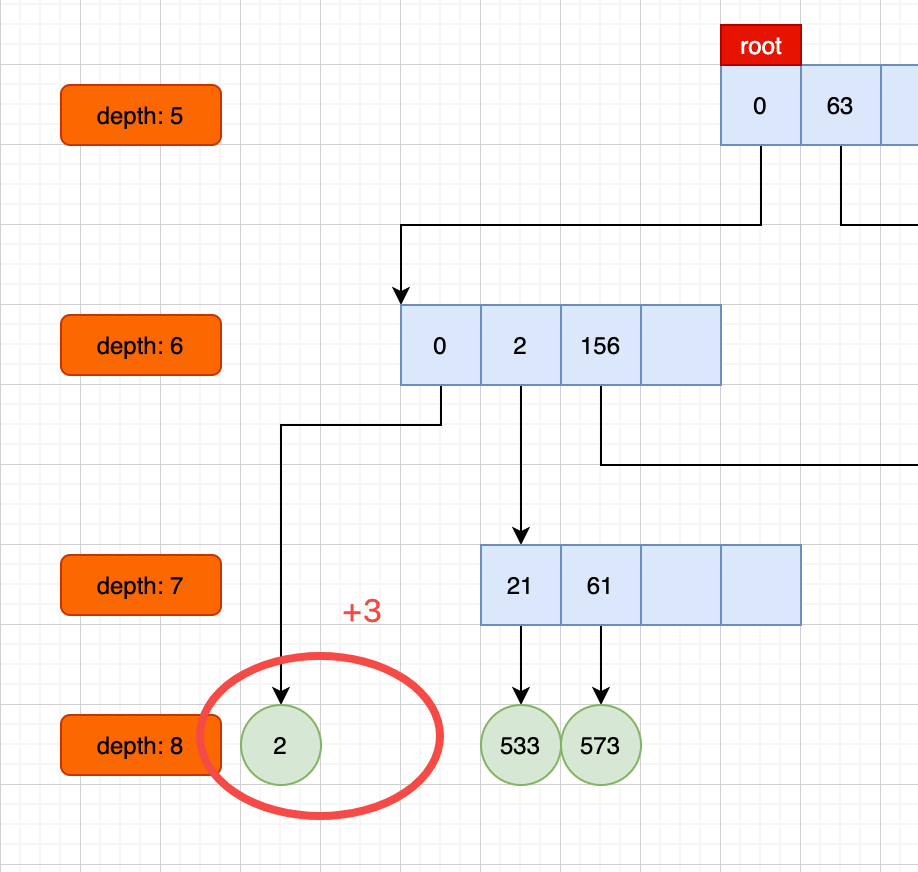
int checkPrefix(long key) {
        //从左到右 多少位是相同的
        //8位一个深度 depth 默认8 ,最深深度
        return Math.min(Long.numberOfLeadingZeros(key ^ nodeKey) / 8, depth);
}
// depth=6带一个Leaf, 再添加一个Leaf,创建一个node4 挂到 parent节点  如上例
性能数据对比
| random | ART(ms) | TreeMap(ms) | diff |
|---|---|---|---|
| put (16M keys) | 12857 | 40562 | 215% |
| search (16M keys) | 7253 | 25413 | 250% |
| foreach (16M keys) | 695 | 2334 | 235% |
| put (64k keys) | 73 | 105 | 43% |
| search (64k keys) | 25 | 28 | 12% |
| foreach (64k keys) | 7 | 14 | 100% |
| put (1M keys) | 896 | 1420 | 58% |
| search (1M keys) | 373 | 684 | 83% |
| foreach (1M keys) | 52 | 73 | 40% |
| 连续 | ART(ms) | TreeMap(ms) | diff |
|---|---|---|---|
| put (16M keys) | 1999 | 4302 | 115% |
| foreach (16M keys) | 152 | 192 | 26% |
| put (650K keys) | 174 | 191 | 9% |
| foreach (650K keys) | 17 | 35 | 100% |
分析性能产生的原因
- key越多,差距越大
- 随机的比连续的差距大
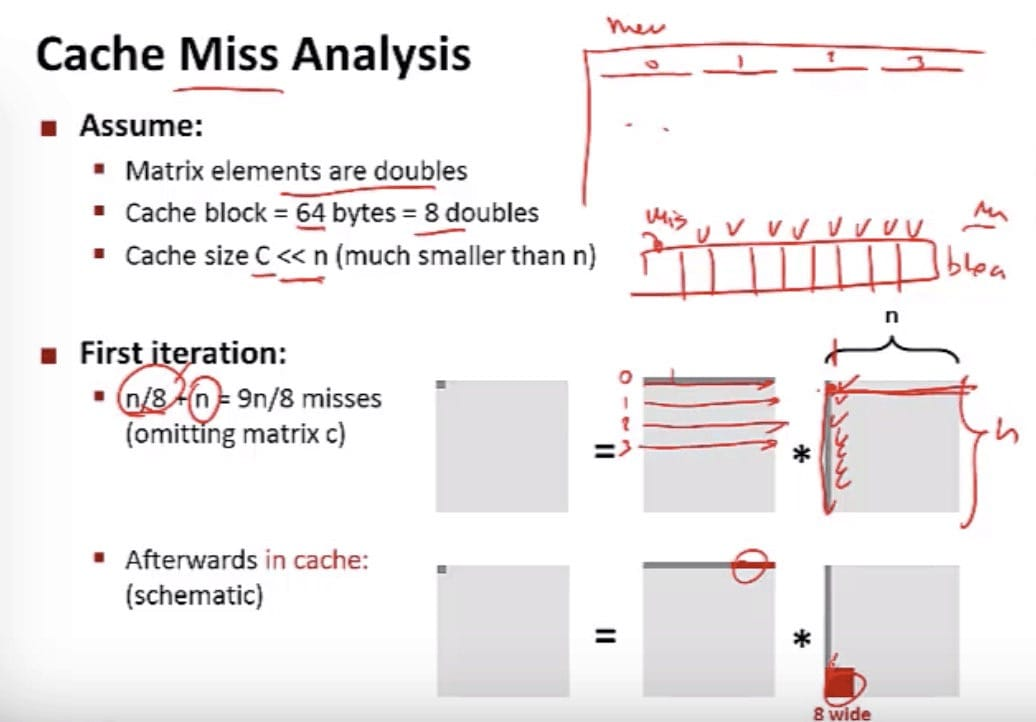
随机的比连续的差距大 –> 考虑缓存的影响。
对比二者的结构:
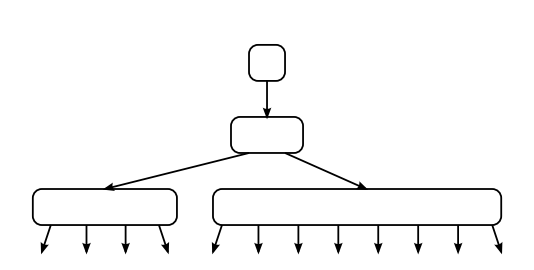
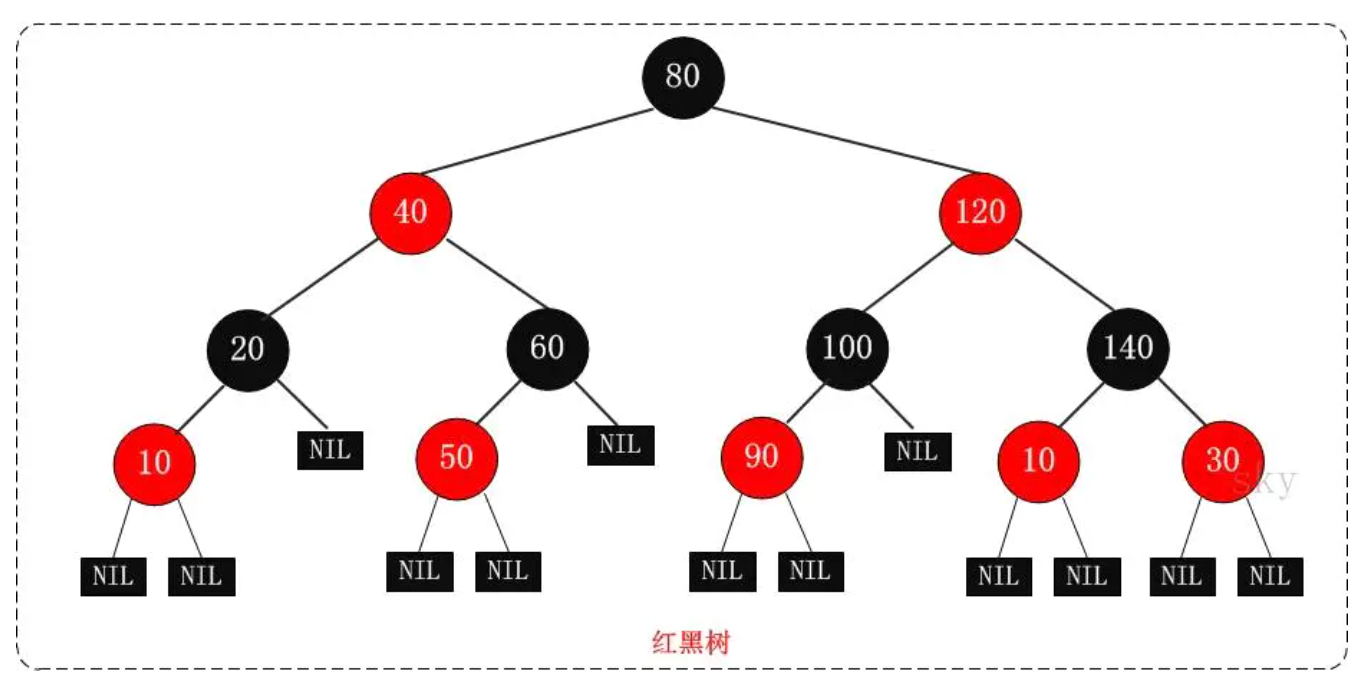
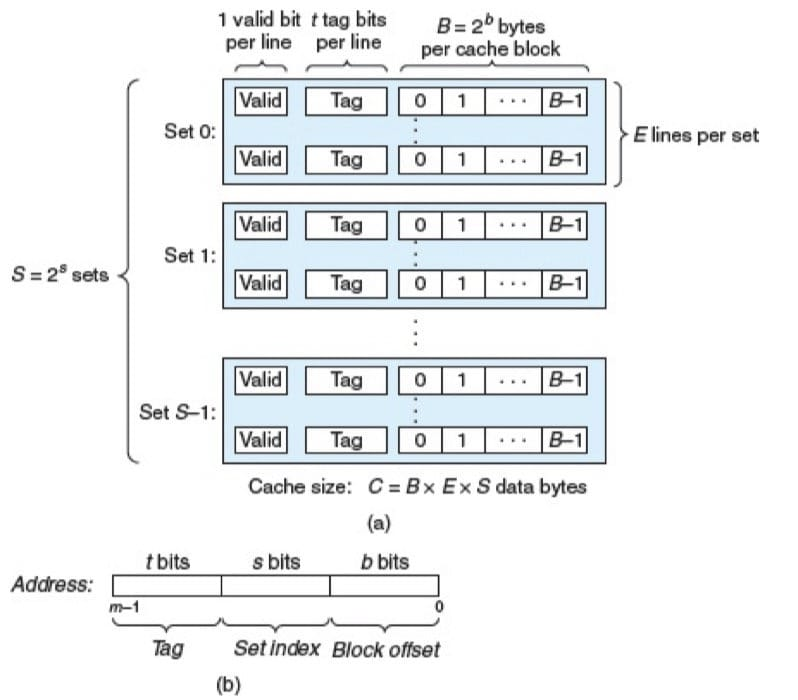
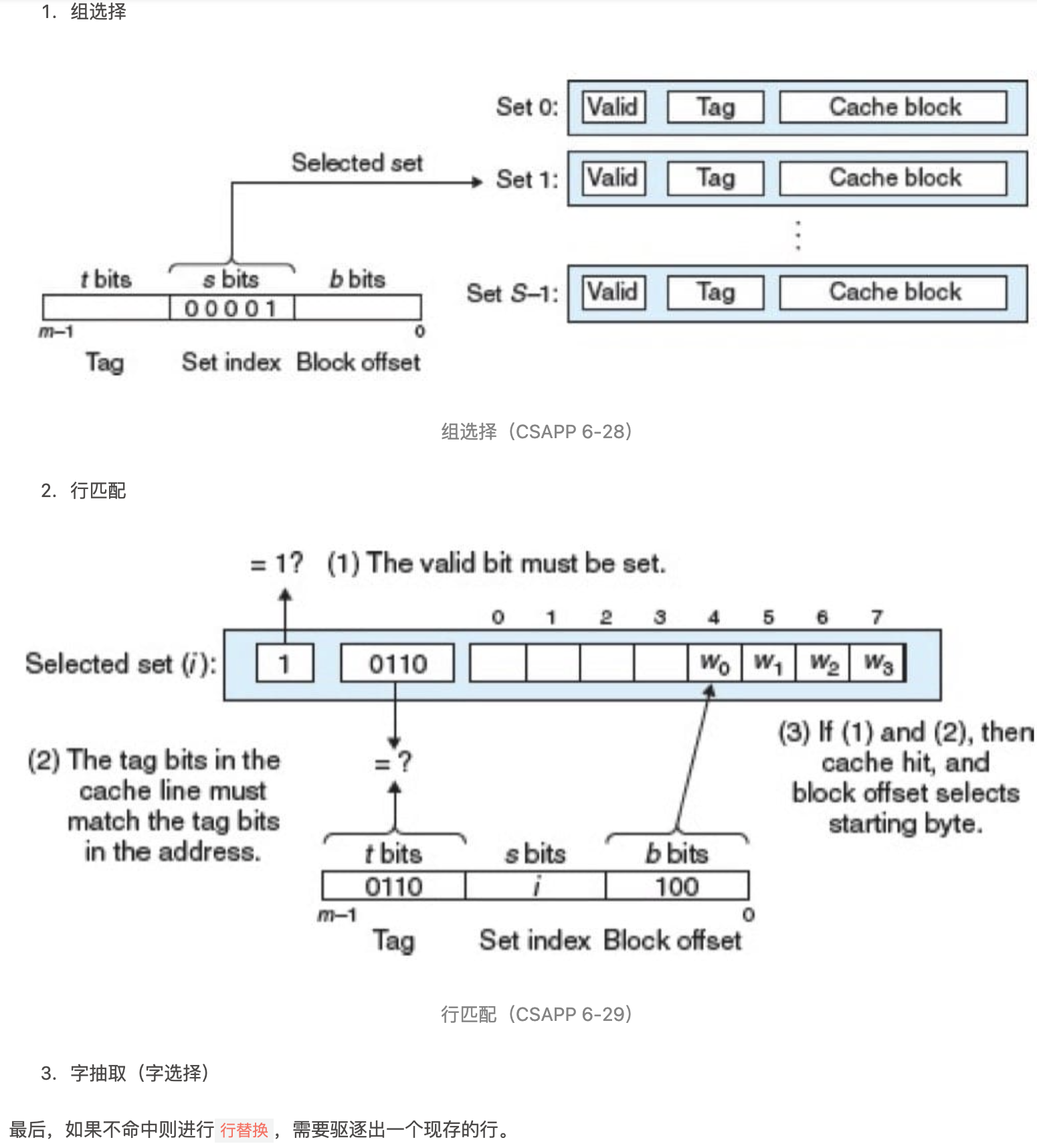
高速缓存存储器结构
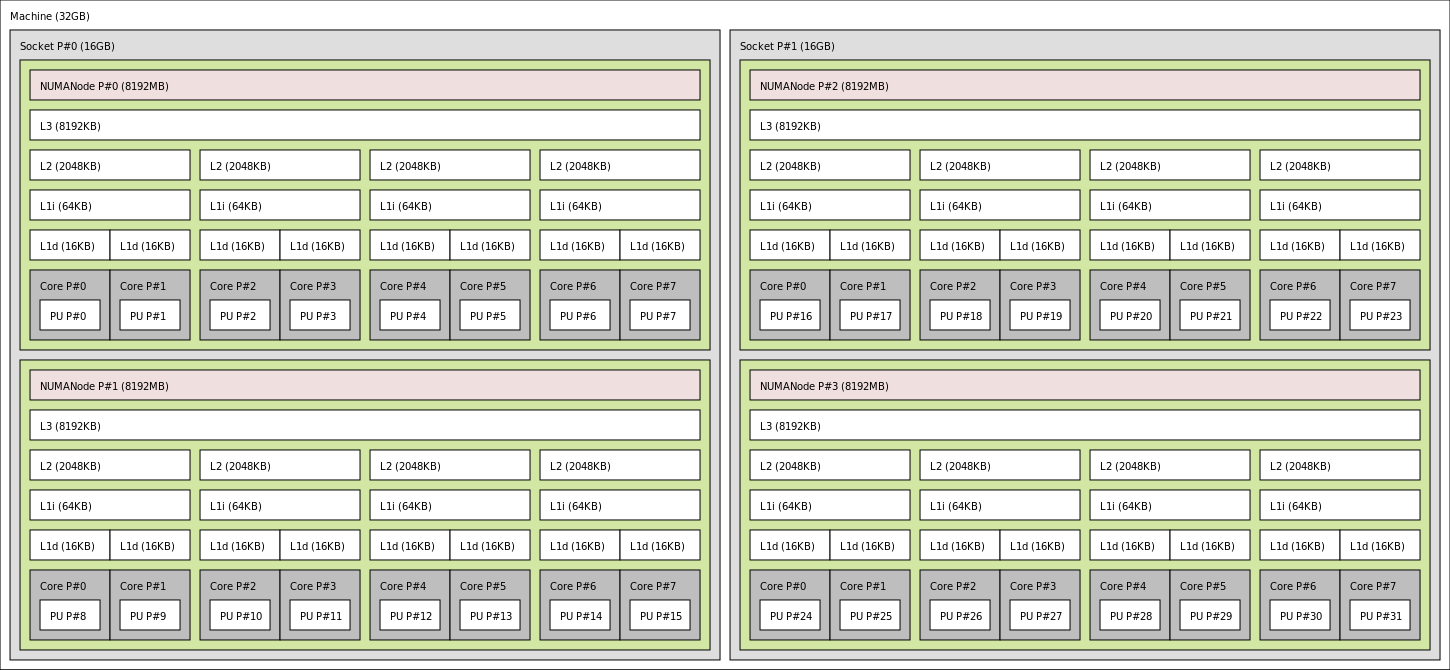
撮合服务器 CPU型号是 Intel(R) Xeon(R) Platinum 8369B CPU @ 2.70GHz, intel官网没有( L3 cache是49M,见附录),应该是订制的,找同类型的CPU参数:
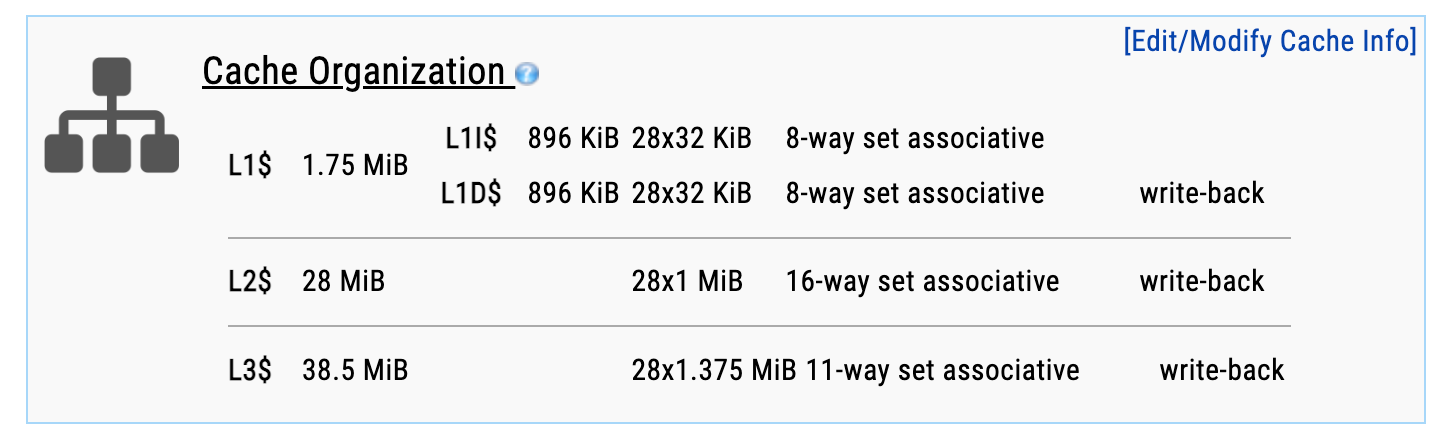
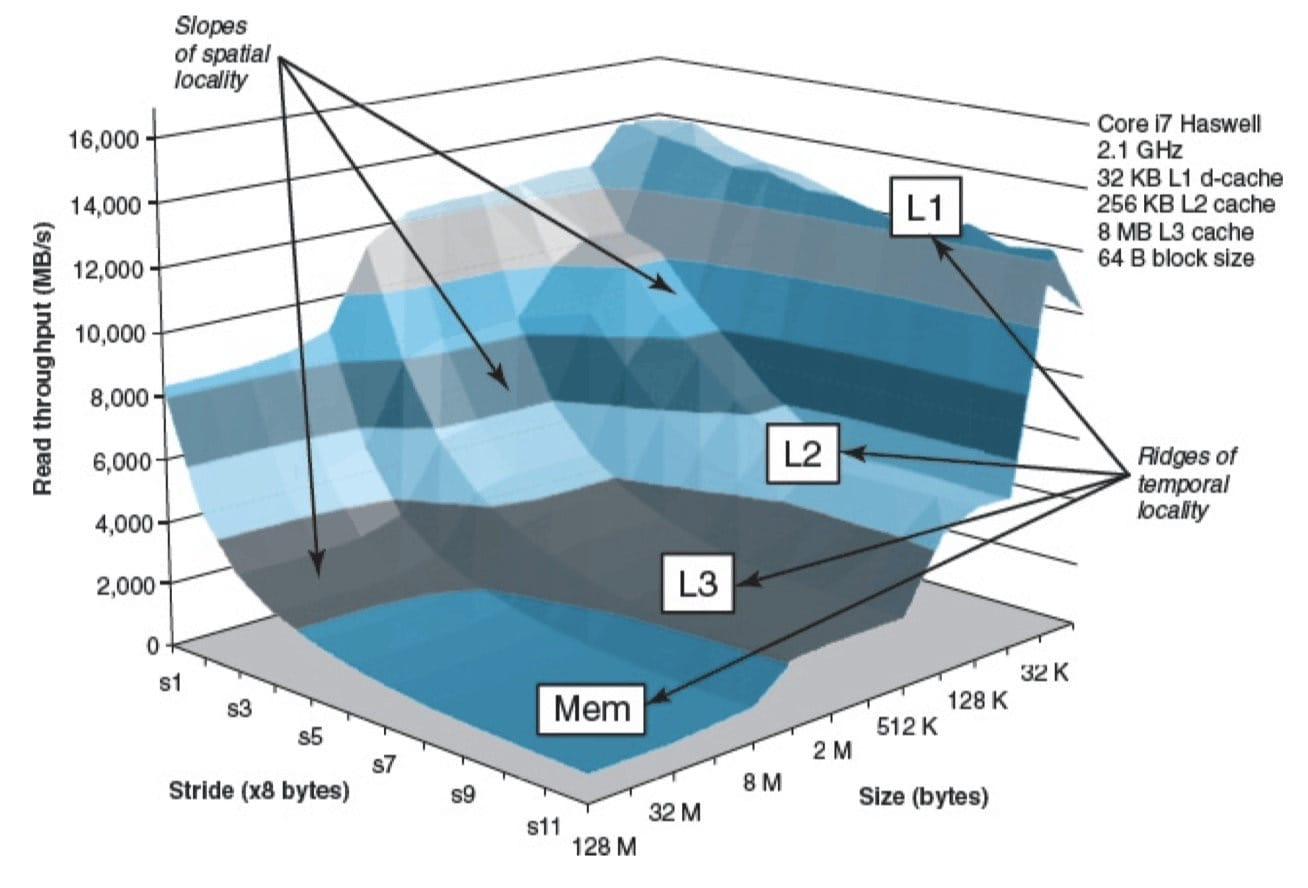
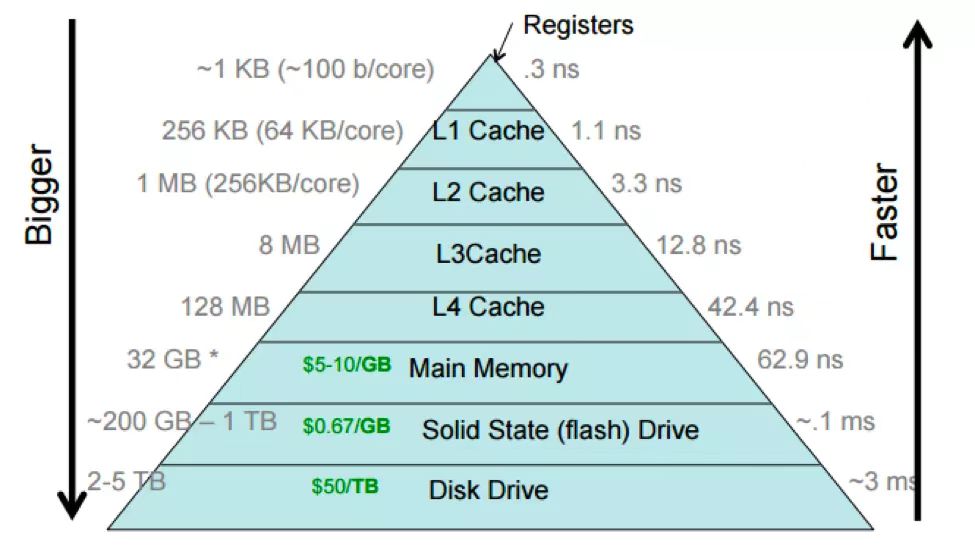
考虑一个计算机系统,其中每个存储器地址有 m 位,形成 M= 2^m个不同的地址。这样一个机器的高速缓存被组织成一个有 S=2^s个高速缓存组(cache set)的数组。每个组包含 E 个高速缓存行(cache line)。每个行是由一个 B=2^b 字节的数据块(block)组成的,一个有效位(valid bit)指明这个行是否包含有意义的信息(为了方便),还有 t = m-(b+s) 个标记位(tag bit)(是当前块的内存地址的位的一个子集),它们唯一地标识存储在这个高速缓存行中的块。
不命中时的行替换
替换组中的哪一行(没有空行)?替换策略:
- 最不常使用(Least-Frequently-Used,LFU)
- 最近最少使用(Least-Recently-Used,LRU)
所有这些策略都需要额外的时间和硬件。
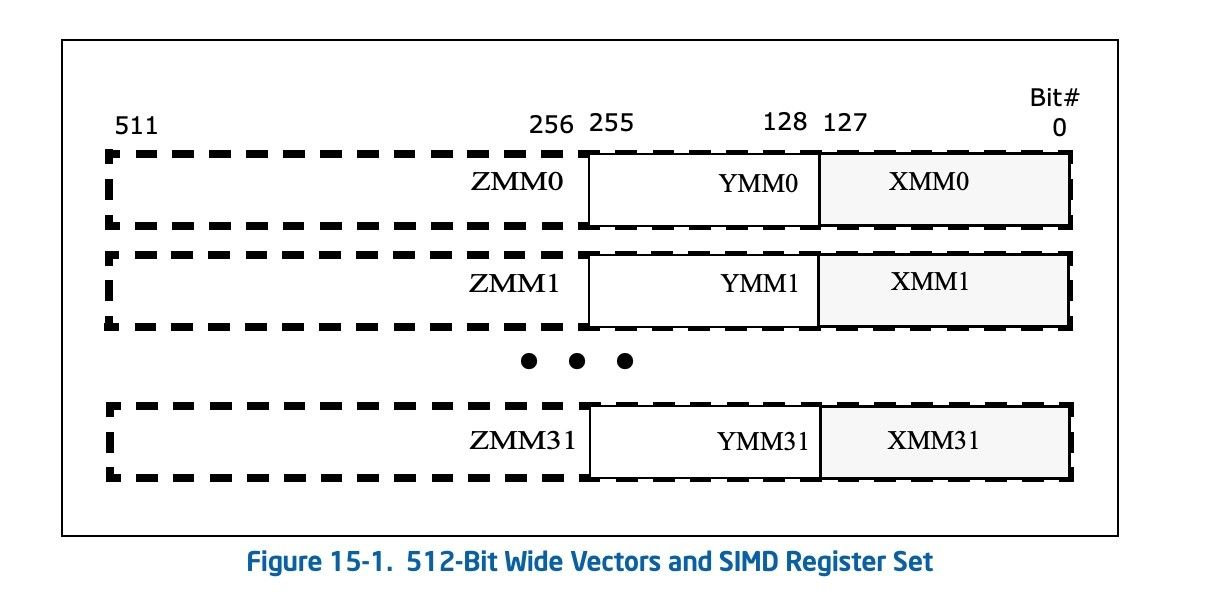
另外的优化途径-SIMD
硬件支持

语言支持
Java JEP 417: Vector API (Third Incubator) on jdk17/18
例子
static final VectorSpecies<Integer> SPECIES = IntVector.SPECIES_256;

void multiply(int[] array, int by) {
    int i = 0;
    int bound = SPECIES.loopBound(array.length);
    IntVector byVector = IntVector.broadcast(SPECIES, by);
    for (; i < bound; i += SPECIES.length()) {
        IntVector vec = IntVector.fromArray(SPECIES, array, i);
        IntVector multiplied = vec.mul(byVector);
        multiplied.intoArray(array, i);
    }
    for (; i < array.length; i++) {
        array[i] *= by;
    }
}
Vector Api
| 组件 | items |
|---|---|
| VectorSpecies | SPECIES_512, 256, 128… |
| Vector | ShortVector, LongVector |
| VectorMask | firstTrue() , trueCount() , anyTrue()… |
| VectorOperators | EQ , LT, GT… |
用SIMD 优化 radix tree的查询
   short[] sss = new short[16];
   for(short i = 0; i<16; i++){
       sss[i] = (short) (i*10 + 1);
   }
   // 1 11 21 31 41 51 61 ...
   VectorSpecies<Short> species = ShortVector.SPECIES_256;
   Vector<Short> vecArrays = species.fromArray(sss,0);

// compare 16 keys with one instruction in parallel.
   int idx = vecArrays.compare(VectorOperators.EQ,51).firstTrue();
node 48、256 search
由于VectorApi不支持指针和bool, 对于children多的node,维护一个与children对应的bool flags[childrens],通过 SIMD批量获取 index后,children.get(index)。
总结
- 适合Key⻓度固定或较短的场景
- 较大的Span和垂直压缩显著提高性能
- 可变的Node大小,显著提高空间利用率,并充分利用SIMD指令
- 使用数组存储数据对缓存更加友好
- 只支持字典序,不适合BigDecimal
- 可变Node与node256 性能近似,与TreeMap比显著提升
引用
- https://www.intel.com/content/www/us/en/products/sku/120504/intel-xeon-platinum-8168-processor-33m-cache-2-70-ghz/specifications.html
- 志强铂金8280: https://en.wikichip.org/wiki/intel/xeon_platinum/8280
- 其他处理器: https://ark.intel.com/content/www/cn/zh/ark.html#@Processors
- 硬件结构: https://zh.wikipedia.org/wiki/File:Hwloc.png
- https://db.in.tum.de/~leis/papers/ART.pdf
